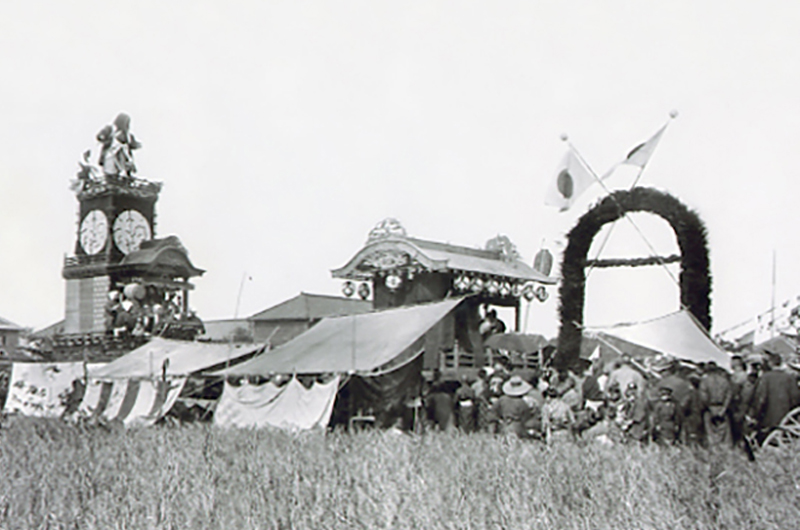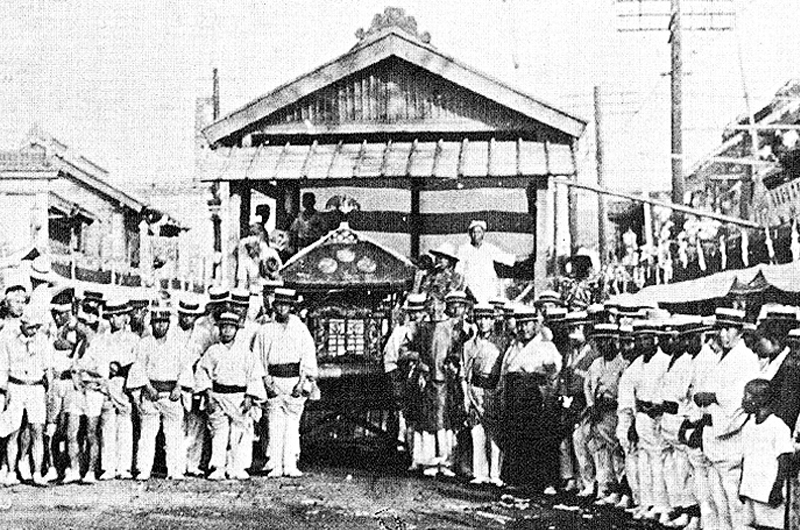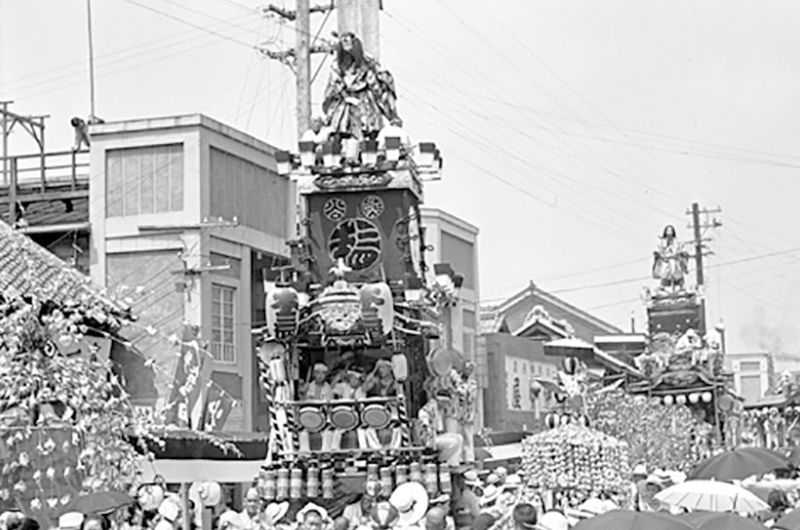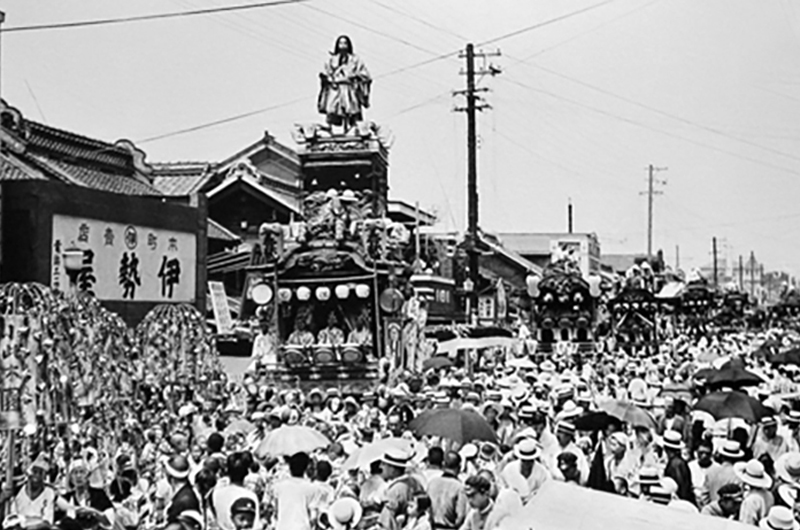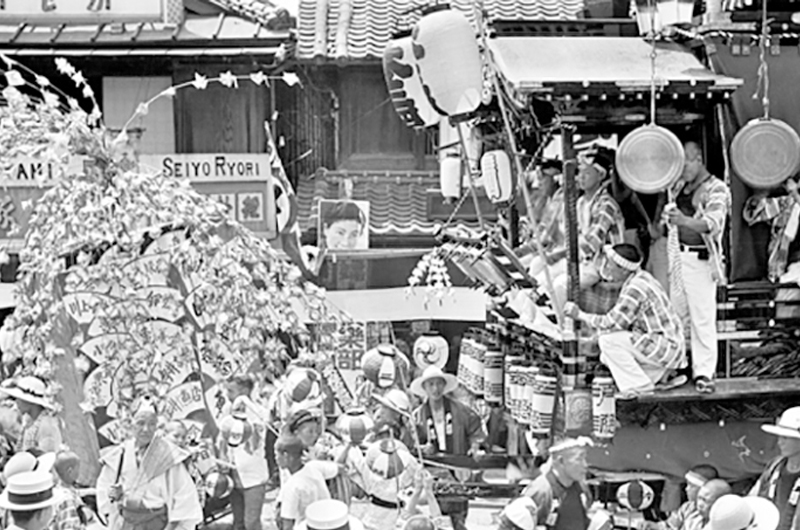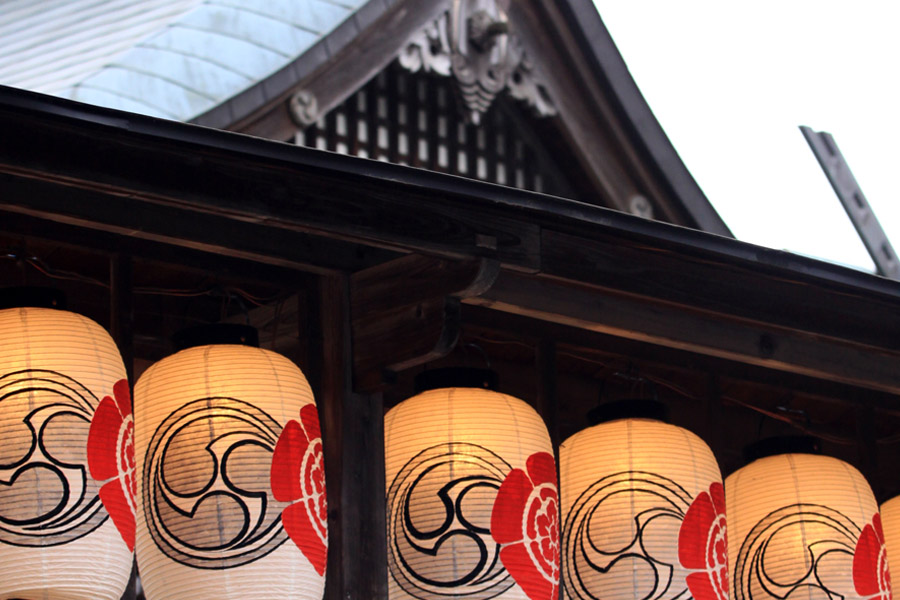
関東一の祇園熊谷うちわ祭
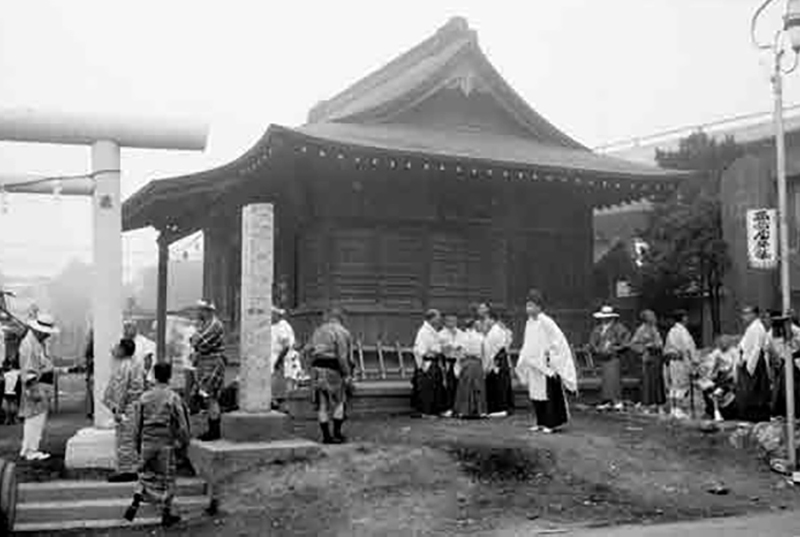
うちわ祭は、当地に鎮座する八坂神社のご祭礼です。八坂神社は、文禄年間(1592~)に京都八坂神社を勧請し、現在鎌倉町にある愛宕神社に合祀されたものであります。
熊谷の夏祭りの起源を示す最初の記録は、江戸中期の寛延3年(1750)に、当時各寺社ごとに行っていた祭りを町内統一の祭りにする上申書でありました。町役人の許可により、以来町内全体の祭りとなり、現在の祭りの形態が作られました。
その頃の祭事係は、祭りの期間一躍町役人と同じ力を持ち、祭りのすべてを取り仕切る祭番となり、形態とともに権限も脈々と受け継がれております。
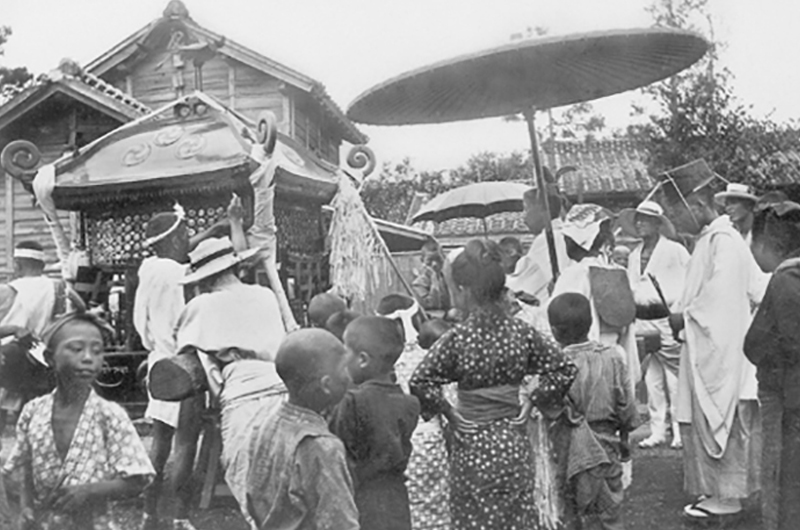
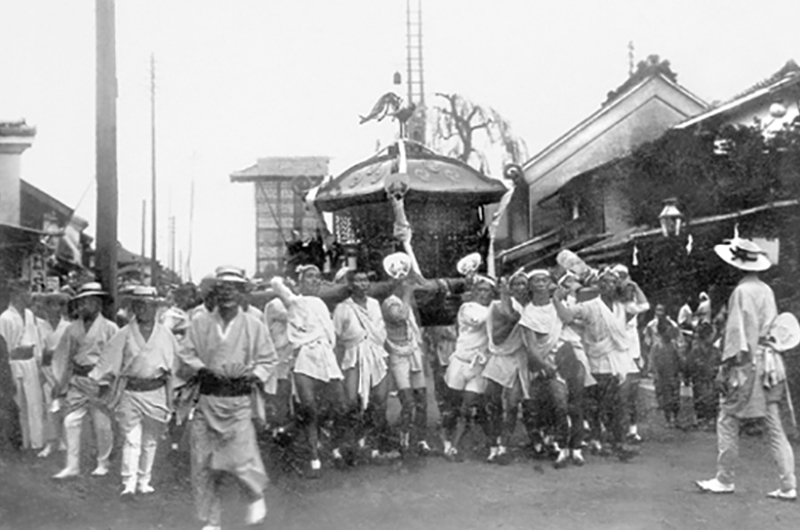
天保年間(1830~)は祭りの中輿の時代といわれ、重さ200貫の神輿が新調され、祭りの原点ともいえる全町合同の神輿渡御が始まりました。
またこの頃より、町内各店が祭りの期間中、買物客に赤飯をふるまった事から、「熊谷の赤飯ふるまい」として評判となり、祭りの名物となりました。
「うちわ祭」の名称の由来は、夏の祭礼で配布されていたうちわを原点として、明治35年頃より、料亭「泉州楼」の主人がうちわを配付したことにあると語り継がれています。東京での修行中に、うちわが飛び交うことで知られていた「天王祭」からの影響を受けた主人は、老舗「伊場仙」から渋うちわを買い入れ、熊谷の祭礼で配り始めたことが発端となっています。この「うちわ」の登場が好評を博し、その後に各商店でも屋号などを記したうちわを出したため、買い物は「熊谷うちわ祭」の日といわれるようになりました。
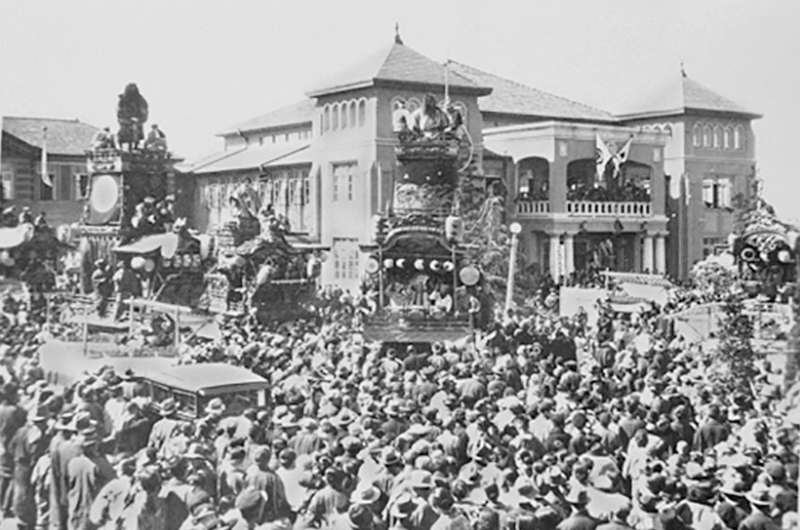
時を同じくして絹産業などの発展などにより町はにぎわい、各町競って山車・屋台を購入し、神輿渡御と山車・屋台巡行による現在のうちわ祭の原型はこの時に作られ、今日まで続いております。
このように「町民一体として始まった伝統」「江戸からの祭文化の継承」「自ら熱意で祭をつくり上げてきた熊谷人の心意気」が融合し、今や関東一の祇園として発展しております。
祭 年 表
江 戸
大永年間
行源法印(大膳院)が、京都より愛宕権現を勧請。(『明細帳』)
文禄年間
八坂神社を愛宕権現内に合祀。(『埼玉の神社』10頁)
江戸中期
1700年代初期において、祇園柱を用いた祭礼が行われていた記録が残っている。(三浦玄昌「汚隆亀鑑」)
寛延3年
4月、名主善兵衛以下109名が、祭りを町内一斉に行なうものとするよう町役人に上申。これに尽力した宿役人による祭事御用番「熊谷草分け6人衆」が誕生。祭りは、奴稲荷大明神が所有していた宮神輿を用いる、神輿祭りの形態であったとされる。(「熊谷宿祇園祭礼神輿渡御由来覚」)
天保元年
大膳院十五代と石川兵左衛門が浄財を集め、初めて町衆により愛宕八坂神社の神輿が製作される。
江戸末期
夏の祭礼行事は神輿祭りとして定着し、多くの町人が参加するようになる。江戸風の騒がしさが増すようになった。
明 治
24年
本町三四(現・第弐本町区)が、江戸神田の紺屋が個人所有する山車を買い受ける。この頃、泉屋横町の料亭「泉州楼」の主人が、名入れの渋うちわを配り好評を博す。
27年
鎌倉区が山車を製作。この時期から、地区内における小規模の山車巡行の行事が行われる。
31年
本町一二(現・第壱本町区)が地元棟梁に頼み、本町三四の山車を参考にして山車を製作。
35年
筑波区が鴻巣より130円で山車を購入。大正5年に製作する山車は、昭和35年まで使用される。
39年
旧5カ町制(本町一二、本町三四、筑波区、鎌倉区、仲町区)が成立し、年番町制のの基礎 ができる。
42年
鎌倉区山車を越生へ譲渡。
大 正
13年
銀座区、彌生町区が屋台を製作。旧5カ町に加え彌生町区が祭礼行事に参加。
大正〜
石原村に、上・中・下町三台の屋台が存在していた。その内の2台は、現在の群馬県藤岡市(旧鬼石町)の祭りで使用されている。
昭和初期
昭 和
8年
熊谷市制施行を契機に、旧石原村の本石区と石原区が巡行行事に参加。
12年
石原区が、熊谷唯一の四方破風屋根屋台を製作。
本石区が、屋台を製作。
20年
8月14日から15日未明、終戦直前の大空襲により愛宕八坂神社・宮神輿と、鎌倉区の屋台が焼失。
22年
荒川区、銀座区が復興の勢いで祭礼行事に参加し、現在の年番町を担う8カ町制(本町一二、本町三四、筑波区、鎌倉区、仲町区、彌生町区、荒川区、銀座区)が成立。
荒川区が屋台を製作。
23年
彌生町区岡田屋の宮大工小林棟梁により、愛宕八坂神社神輿を新調。
28年
鎌倉区が屋台を製作。
30年
仲町区が山車を製作。
32年
鎌倉区が年番町を担ったこの年から「大総代」の名称を採用。
34年
2月、七町区(本町一二、本町三四、筑波区、鎌倉区、彌生町区、荒川区、銀座区)の若連支部長が発起人となり「熊谷祇園会」を発足。その後、筑波区、仲町区、石原区を除く、9町区によって構成されることになった。
35年
伊勢町区が、仲町区から譲り受けた小型屋台で巡行行事に参加する。
36年
お仮屋(行宮)の位置が本町2丁目から3丁目電話局前に移される。
筑波区が山車を製作。
39年
17号国道交通頻繁となり横断以外山車屋台の巡行禁止になる。
42年
「お祭り広場」名称が8カ町会議で決定される。「年番送り」行事が始まる。
44年
お仮屋(行宮)が現在のお祭り広場へ移転。
45年
8月、大阪万国博覧会に「うちわ祭」が出場。
48年
10月、東京銀座まつりに「うちわ祭」が出場。
49年
17号国道、歩行者天国となり国道上山車屋台巡行復活。
51年
8月、明治神宮外苑「日本の祭」にうちわ祭が出演。
55年
櫻町区が伊勢町から小型屋台を譲り受け、巡行行事に参加する。
8月、第1回まつり・イン・ハワイに「うちわ祭」が出演。
63年
4月、さいたま博覧会に「うちわ祭」が出場。
平 成
元年
愛宕八坂神社を建替落成。
2年
4月、大阪国際花と緑の博覧会に「うちわ祭」が出場。
6年
銀座区が山車を製作。
櫻町区が屋台を製作。(旧屋台、吹上へ)
7月、京都平安建都千二百年記念事業の全国祇園祭山笠巡行に「うちわ祭」が出場。
15年
11月、江戸開府四百年記念事業の江戸天下祭に「うちわ祭」が出場。
16年
9月、彩の国まごころ国体に「うちわ祭」が出場。
17年
10月、江戸天下祭2005に「うちわ祭」が出場。
24年
荒川区が山車を製作。
30年
伊勢町区が山車を製作。
令 和
元年
5月、天皇陛下御即位奉祝神輿・山車巡行。
9月、ラグビーワールドカップ2019に「うちわ祭」が出場。
2年
コロナ禍にともなう自粛により、本宮にて神事のみを執り行う。
GALLERY